Football
UCA’s Monte Coleman, three-time Super Bowl winner, dies at 68
Bears’ Monte Coleman, a three-time Super Bowl champion who spent his entire NFL career with Washington, has died at 68.

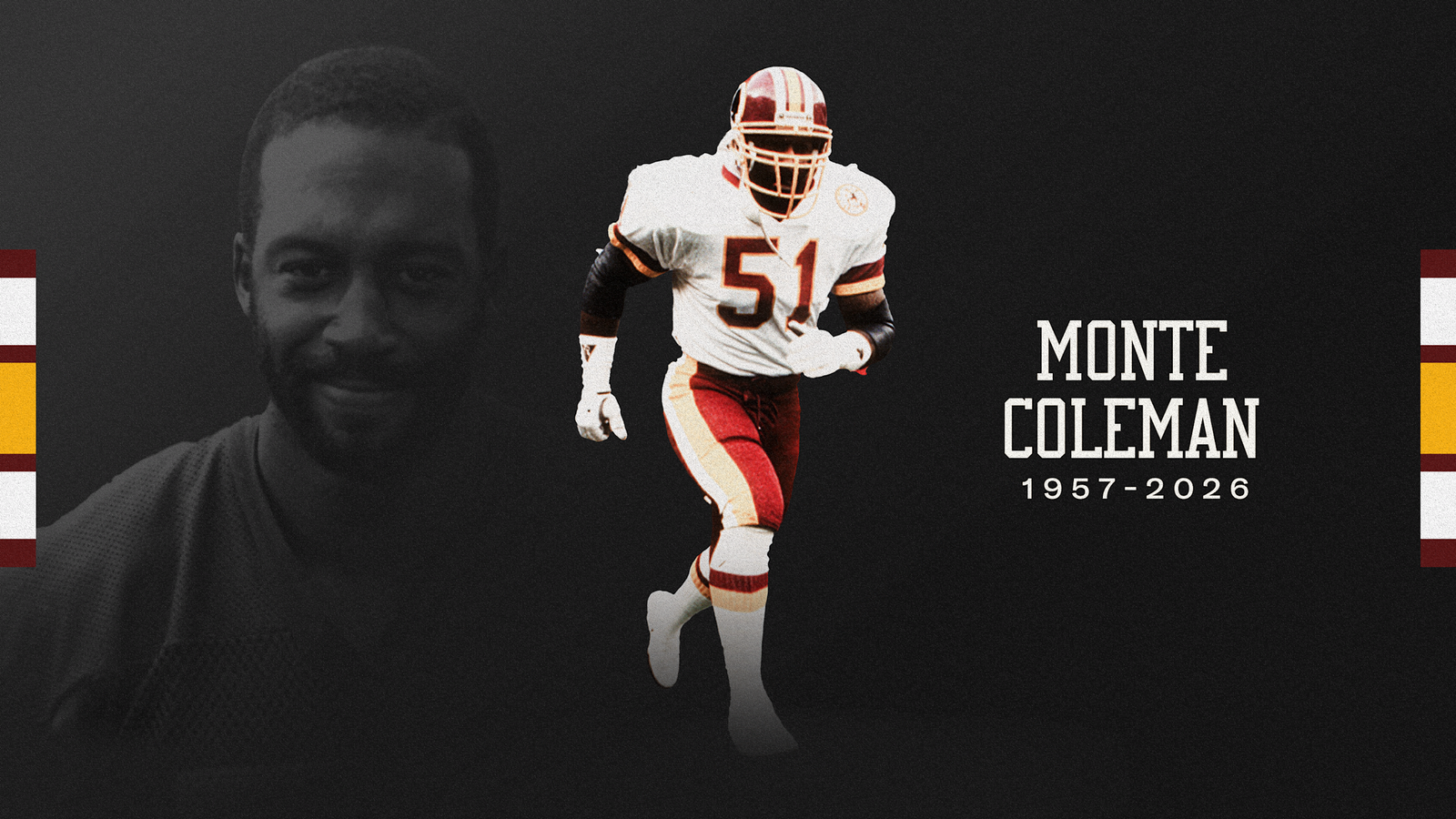
The Washington Commanders announced Sunday that Monte Coleman, one of the most decorated players in Washington football history, has died. He was 68.
Coleman was one of the key people that established what has been a 50-year tradition at UCA of winning football games at the highest level.
“Monte Coleman was a man of high character and great integrity,” UCA athletics director Matt Whiting said. “Not only did Monte have an outstanding playing career at UCA and in the NFL, his mentorship as a coach impacted the lives of countless young athletes. Monte will be missed by many, and we will always remember his positive impact and the legacy he leaves behind.”
He will also be missed by his teammates from days playing for the Bears.
“From the time he stepped in as a freshman he led the team in prayers and then on the field, too,” teammate Ken Gilkey said Monday morning. “He was a consistent figure that would lead in the weight room. It was hard working out, but he wasn’t just a bulky player.”
After not playing football for nearly of his time in high school in Pine Buff, Arj., Coleman arrived at UCA as a 170-pound walk-on. He was not a particularly impressive players. But he grew.
The leadership part was already there and Gilkey, who came from the small town of Danville buried in the foothills of the Ozark Mountains, became close friends with him.
UCA was small enough that in the old football dorm of Minton Hall, everybody got to know everybody really well and really quickly.
In the last few years, Gilkey was one of the people closest to Coleman. He was impressed by the mentoring he did with young people and adults, too. He often drove down to the smaller remote towns in Southeast Arkansas to pastor and work with small groups.
“I know him from being a man standpoint,” Gilkey said. “His preaching and working with kids and grown men he did it out of his heart. His heart was more than just playing football. He was a great man.””
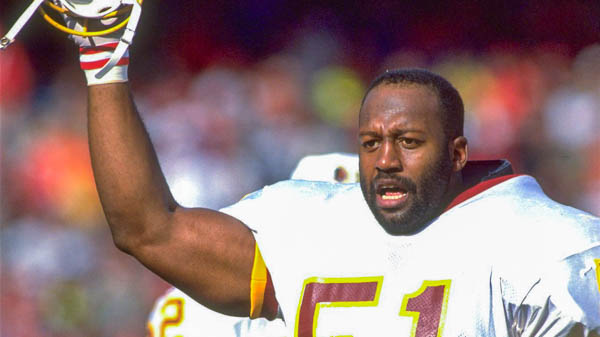
Former UCA Bears great Monte Coleman with the Washington Redskins.
Coleman’s death removes a cornerstone figure from the Redskins’ dynasty years as a linebacker who didn’t just witness Washington’s three Super Bowl championships but helped build them from the inside out.
Born on Nov. 4, 1957, in Pine Bluff, Ark., he made his first mark on football history at UCA, where he became a key member of the 1976 Bears squad that played for a national championship under coach Ken Stephens.
That team was part of a program turnaround so significant that UCA has won more than 70 percent of its football games since.
Coleman went on to become the first player in Bears history to be drafted into the NFL, a distinction that set the stage for everything that followed.
“Monte Coleman was one of the greatest players in Washington history,” Managing Partner Josh Harris said in a statement. “He was one of the pillars of our championship defenses having played for all three Super Bowl-winning teams. His durability and leadership set the standard for what it meant to suit up for the Burgundy & Gold.”
From the Bears to the burgundy and gold
Before making his name in the nation’s capital, Coleman with the Bears at safety before switching to linebacker as a senior.
His instincts for the ball showed up early and he finished his college career with 22 interceptions, a school record that stood as a benchmark for the Bears program.
He also became the first player in UCA history to get drafted by an NFL team when Washington selected him in the 11th round of the 1979 NFL Draft.
There was a running joke between him and fellow freshman defensive back David Foyil from Camden, Ark., about he he developed. Foyil has always taken credit for coaching him to the NFL.
“If I hadn’t had David’s coaching, I probably would have been drafted in the third round instead of the 11th,” Coleman would reply laughing.
Despite being the fourth of Washington’s five picks that year, then-general manager Bobby Beathard spotted something in Coleman that he didn’t want anyone else to notice.
“The first time I saw him, I was with eight other scouts,” Beathard said. “I couldn’t stop watching him, but I just had to hope no one saw my interest in him. He just looked like a linebacker to me. He had big legs, he could run, he was smart and he was from a great system.”
That gut feeling turned out to be right.
Coleman developed into one of the most physically imposing players on Washington’s roster, building his body through a demanding workout routine that left teammates in disbelief.
Former defensive tackle Dave Butz recalled that the team’s strength coach would ride on Coleman’s back during push-ups to add resistance to his training.
The results didn’t go unnoticed. Former safety Mark Murphy called Coleman the most gifted athlete he’d ever shared a field with.
“He was so fast,” Murphy said. “I would not have wanted to race him.”
Murphy also said that when Coleman arrived, his frame didn’t look like a safety’s for long. He bulked up at a pace that turned heads around the locker room.
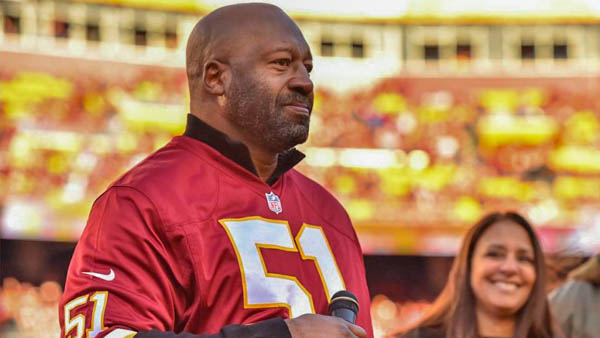
Former UCA linebacker Monte Colemana honored after 16 years with Washington.
16 seasons, three rings, one team
Coleman spent all 16 years of his NFL career with Washington, never wearing another team’s uniform, never seeking a fresh start elsewhere.
That kind of single-franchise loyalty defined how he carried himself and the numbers he put up during that stretch showed a player who brought it every week.
Across 215 regular-season games, Coleman recorded 999 solo tackles, which ranks second in franchise history.
He also registered 49.5 sacks, 17 interceptions — three of which he returned for touchdowns — and 62 starts. He led the entire NFL in tackles in 1980, finishing the season with 118.
Only cornerback Darrell Green played more games for Washington than Coleman did.
The franchise’s three Super Bowl titles — in the 1982, 1987, and 1991 seasons — all came with Coleman’s name on the roster. He also helped Washington reach a fourth Super Bowl before retiring in 1994.
Coleman reflected on what those championships meant to him and his teammates long after his playing days ended.
“We probably did something that we hope can be repeated by the modern-era Redskins,” he said, “but right now people still identify with us as Super Bowl champs. It gives you a sense of credibility to say that I was a part of the good old days when the Redskins were winning Super Bowls.”
Coaching, community and a championship at UAPB
Coleman’s football life didn’t end when he took off his helmet for the last time.
He moved into coaching as a linebackers coach at Arkansas-Pine Bluff and in 2007 he was promoted to head coach of the program. In 2012, he guided the Golden Lions to a Southwestern Athletic Conference championship, adding a coaching title to a résumé already full of playing accolades.
“Coach Coleman represented everything we strive for at UAPB,” said athletic director Chris Robinson. “Excellence, integrity, and a relentless commitment to developing our student-athletes. His legacy is not only written in championships and honors, but in the lives he changed every single day.”
His post-playing career also included wide recognition beyond the football field.
In 1996, Coleman was named Washingtonian of the Year for his philanthropic work and community service.
Two years later, the Arkansas Sports Hall of Fame inducted him, and he was also recognized as part of Washington’s 70 Greatest list. He received the Elijah Pitts Award for lifetime achievement and, in 2015, was enshrined in Washington’s Ring of Fame.
That Ring of Fame honor carried special weight for him.
“That was one of the greatest accolades I’ve ever received,” he said. “To be listed among those players, I will always cherish that. That means a whole lot to me.”
Coleman is survived by his wife of 43 years, Yvette, and their five children: Jasmine, Kyndall, Kyle, Corey, and Londie.